|
RECENT BLOGS
A recent report from the Center on Reinventing Public Education (CRPE) sheds new light on the findings on a June 2012 Government Accountability Office study that found that nationally charter schools serve fewer students with disabilities than traditional public schools. CRPE’s study suggests that much more nuance is needed in looking at how charter schools serve students with disabilities.
CRPE’s study looked specifically at New York state’s special education enrollment. As Robin Lake, Director of CRPE, and Alex Medler, Vice President of policy and advocacy for the National Association of Charter School Authorizers, write in their recent article in Education Week, “The [study’s] results showed a much more complex picture, one that casts doubt on one-size-fits-all policy solutions like quotas or enrollment targets. Any state-level uniform enrollment target is too simple a solution for the complex problems associated with special education enrollments and equal access.”
The study found that rates of special education students served at the middle and high school levels do not vary between charter and traditional schools. It also shows that there is great variation in the number of special education students served on a school-by-school basis, regardless of whether or not it is a traditional or charter school. Schools, whether charter or traditional, may attract a certain population of students based on their reputation and track record with those students, say Lake and Medler.
However, the researchers did find that elementary charter schools do serve an overall lower percentage of students with disabilities, though they “found no obvious reason to think that charter elementary leaders would be more likely to discriminate than charter middle and high school leaders.”
Lake and Medler suggest further research is necessary to fully understand the difference at the elementary school level, though they offer some hypotheses. For example, they ask, “Are charter schools at lower grades less inclined to label kids as having a disability? Or are kids in charter schools less likely to need an individualized educational program (the federally mandated education plan for students identified as having a disability) because of early intervention? Or are specialized preschool programs and counseling services more likely to send students to designated feeder schools in districts?”
Their overall conclusion, however, is that the national data is too broad and not nuanced enough to give charter school policymakers a clear view of how charters schools serve students with special needs. Instead, they suggest looking at individual schools more closely to determine the cause of underenrollement of special education students, as well as working with the community to address the needs of students with special needs attending all schools, charter or traditional.
Read the full article in Education Week.
This blog originally appeared in Seattle’s Child
Last November, Washington voters approved an initiative that allows the creation of up to 40 public charter schools over five years. The first public charter schools in Washington will likely open for the 2014-15 school year.
This is great news for Washington’s students, especially those for whom traditional public schools are not working. Charter schools will provide an opportunity for kids who need a change of direction and a different learning environment, and will be a potential lifeline for parents looking for another public school option for their student’s education.
Charter schools are publicly funded based on student enrollment, free, and open to all students without restriction, and are authorized and overseen by local school boards or a state commission. Public charter schools are independently operated and have the flexibility to tailor curriculum, school hours, budgets, and staffing to the needs of the students and neighborhoods they serve. Washington is the 42nd state to implement charter schools.
In other states that have charter schools, communities, families, and teachers have embraced the schools for their flexibility and focus on student achievement.
“There’s a lot of freedom, there’s a lot of energy, and there’s a lot of change that’s happening within charter schools that excites me as a teacher,” said Joel Key, who has taught both in a traditional public school and in a charter school in California. “I have seen students succeed and grow in ways that have been incredibly inspiring to me and to the students’ families.”
Since the law was passed in November, the state has made steps toward implementation. In March, Gov. Jay Inslee, Lt. Gov. Brad Owen, and House Speaker Frank Chopp announced their appointments to the state’s Charter School Commission. The nine members named have been appointed to oversee the charter school system, in addition to acting as an authorizing body for charter school applicants in districts that have not become authorizers themselves.
The State Board of Education (SBE) has also been hard at work making sure that the new charter law is implemented faithfully. SBE is tasked with creating an annual application process and timeline for those seeking to start a charter school in Washington.
As progress continues toward opening high quality charter schools in Washington state, the focus must be on ensuring that the new charter law is implemented with fidelity and the highest degree of accountability.
To learn more, visit the Washington Coalition for Public Charter Schools website.
The newly formed Washington State Charter School Commission charged with authorizing charter schools and holding them accountable met this week and elected their leadership. Steve Sundquist, former President of the Seattle School Board, was chosen as Chair and Larry Wright, managing director of the Bellevue Arts Museum, was chosen as vice chair.
The Commission discussed the timeline to begin accepting charter school applications. The Commissioners also heard two presentations. Robin Lake from the Center on Reinventing Public Education presented on the lessons from charter school research. William Haft from the National Association of Charter School Authorizers presented on charter school authorizing.
The next meeting of the Commission is May 28 at the Technology Access Foundation.
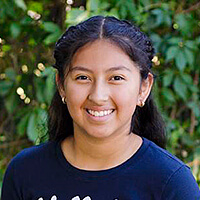
Macy Olivas is a student at Whitman University in Washington, and a graduate of Preuss Charter School in San Diego, CA.
In this video, recorded when she was advocating for Washington to adopt charter school legislation in January 2012, Macy relates her experience as a student in a charter school. She talks about how the school, which drew students from across the city, changed her life compared to her peers.
“I witnessed friends that I went to elementary school with get involved in gang activity, get pregnant, and when we reached high school, even drop out,” she recalls. “Although we all grew up in the same neighborhood, our mentality of what was going to become of our future could not have been further apart.”
She talks about the support she and her peers received at their charter school that led to their success. The school offers more instructional time by increasing the length of the school day and school year; provides intensive graduation and college counseling; and requires honors and AP level coursework. But, Macy says the biggest impact made was by the faculty at her school.
This support had fantastic results. In her class of 102 students, all of whom came from low-income families across San Diego, 100 percent graduated, and 94 percent went on to a college or university.
She says ultimately her experience inspired her to become a teacher and to share the opportunities she had with other students from her background. Her charter school provided her with a great education and, she says, “a great education shouldn’t be the exception—it should be the rule.”
Questions About WA’s Public Charter School Law?
Voters have decided – public charter schools are now an allowed option for Washington parents and students. What happens next? Read the FAQ for answers to key questions about charter schools and how our state’s charter school system will be brought into place in the months ahead.